
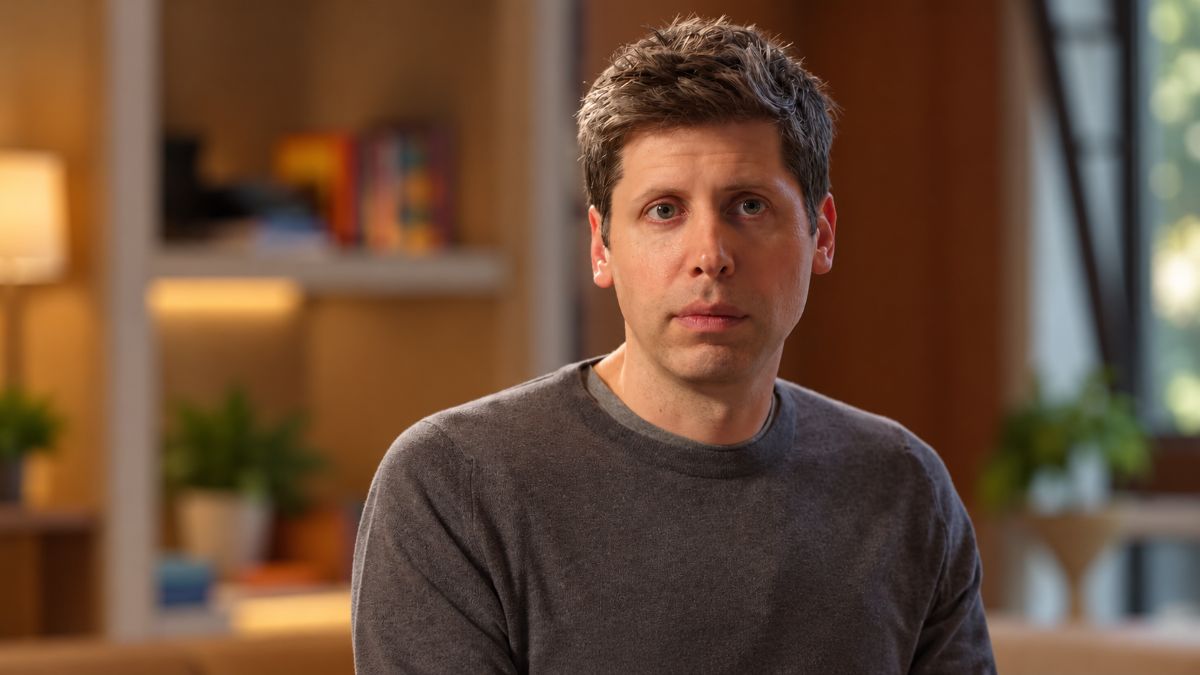
Artificial intelligence is usually sold in the language of possibility: faster discovery, better medicine, smarter software, more productive workers and tools that can take on tasks people would rather not do. But when OpenAI CEO Sam Altman recently acknowledged that “some bad things” are likely to happen as AI becomes more powerful, he gave critics and supporters something far more combustible than another product announcement.
The argument is no longer whether AI carries risks. Even many of the people building it say it does. The argument is who gets to decide how much damage is acceptable on the way to whatever benefits come next.
In an interview discussed by The Verge, Altman pointed to harms such as hacking and scams while defending continued development. He positioned OpenAI between two poles: one side that wants much tighter restrictions and another that wants as little regulation as possible. His case, broadly, is that society should not freeze a transformative technology because misuse is inevitable.
That sounds pragmatic until the phrase “acceptable risk” moves from a conference stage into somebody’s bank account, job, school, medical record or private life.
The risk is not theoretical anymore
The public has already seen how quickly generative AI can lower the cost of creating convincing text, images, voices and code. Fraud attempts can be more polished. Impersonation can be more believable. Cybersecurity researchers have warned about systems that can accelerate malicious work even when safeguards are supposed to limit it.
At the same time, AI companies can point to real gains. Developers are using models to write and review code. Researchers are testing them for scientific discovery. Small businesses use them for tasks that once required extra staff. People with disabilities have found new ways to interact with computers and information.
That is why this debate refuses to fit neatly into “AI good” or “AI bad.”
The problem is distribution. The company that creates a successful AI product may capture enormous economic upside. The person tricked by a sophisticated scam captures none of that upside. A hospital that uses AI to reduce administrative burden may benefit; a patient harmed by a bad automated decision experiences the downside personally.
So when industry leaders ask society to tolerate a degree of failure, the next question is unavoidable: tolerate it for whom?
OpenAI is arguing for room to move
Altman has repeatedly warned against both reckless development and regulation that could lock the market in favor of a few powerful companies. That concern is not frivolous. Compliance costs can protect incumbents if only the biggest firms can afford them.
But the same argument can become a shield against rules that would impose real accountability.
There is also a trust problem. The public is being asked to accept that companies racing one another toward more capable systems will know when to slow down, disclose failures and place safety ahead of market pressure. Every resignation, security controversy or unexpected model behavior makes that promise harder to take on faith.
OpenAI is hardly alone in that tension. The entire AI industry is trying to prove that rapid deployment and responsible deployment can happen at the same time.
The uncomfortable question
Almost every major technology produced harms alongside benefits. Cars created mobility and deadly crashes. Social media connected billions of people and created new forms of manipulation, harassment and addiction. Pharmaceuticals save lives while sometimes producing severe side effects.
Society did not solve those problems by banning innovation altogether. It built rules, liability systems, safety standards and institutions around them, often after painful failures.
AI may be heading toward the same bargain, except at extraordinary speed.
Altman’s comments matter because they strip away some of the softer marketing language. If bad outcomes are expected, then regulators, companies and users have to stop debating as though safety is a hypothetical side issue. The real fight is over thresholds, responsibility and compensation.
How many failures are too many? What kinds of harm should trigger mandatory safeguards? Who should pay when a model causes damage? And when an AI company says the benefits outweigh the costs, should the company building the system be the one making that calculation?
The technology may be moving faster than the public argument, but that argument is finally becoming impossible to avoid.


Comments